Choose stretch film by the stability of the finished pallet load, not by thickness alone. Film gauge, stretch behavior, applied tension, wrap pattern and the load itself work together. A thinner film can perform well in one wrapping process and fail in another; a thicker film can still leave a pallet unstable if it is applied inconsistently or does not secure the load to its base.
For buyers sourcing industrial stretch film for pallet wrapping, the purchasing objective is a repeatable package that protects the goods through the intended handling route. This technical guide explains containment force, pre-stretch, film usage and the evidence needed before changing specifications.
Understand four terms before comparing film quotations
Film thickness
Thickness, usually specified in micrometres, describes one material dimension. It does not fully describe puncture resistance, stretch behavior, cling or the force remaining on the load after wrapping. Ask for the nominal thickness, tolerance and measurement method. Also specify net film mass separately from the cardboard core and other packaging.
Pre-stretch
Pre-stretch is elongation before film is applied to the load, often produced between rollers on a machine. Using original length as the denominator, the calculation is:
Pre-stretch (%) = (stretched length − original length) ÷ original length × 100.
For example, 1 metre extended to 3 metres represents 200% elongation. Some commercial descriptions use a ratio or different terminology, so confirm the convention. A machine setting or advertised maximum elongation does not establish the actual condition of the film on your pallet.
Application tension
Application tension controls how tightly film is delivered around the load. It is distinct from pre-stretch. Excessive tension can crush lightweight cartons or pull an unstable load out of position; insufficient tension can leave the wrapping loose. Match the setting to the actual film, load shape and wrapping equipment.
Containment force
Containment force describes the restraining effect of the applied film on the load. It depends on the film and the layers present at the measurement location. A meaningful comparison records the instrument, measurement procedure, position, units and time after wrapping. A force result at the middle of a pallet does not show what is happening at the top or bottom.
Classify the load before selecting a film
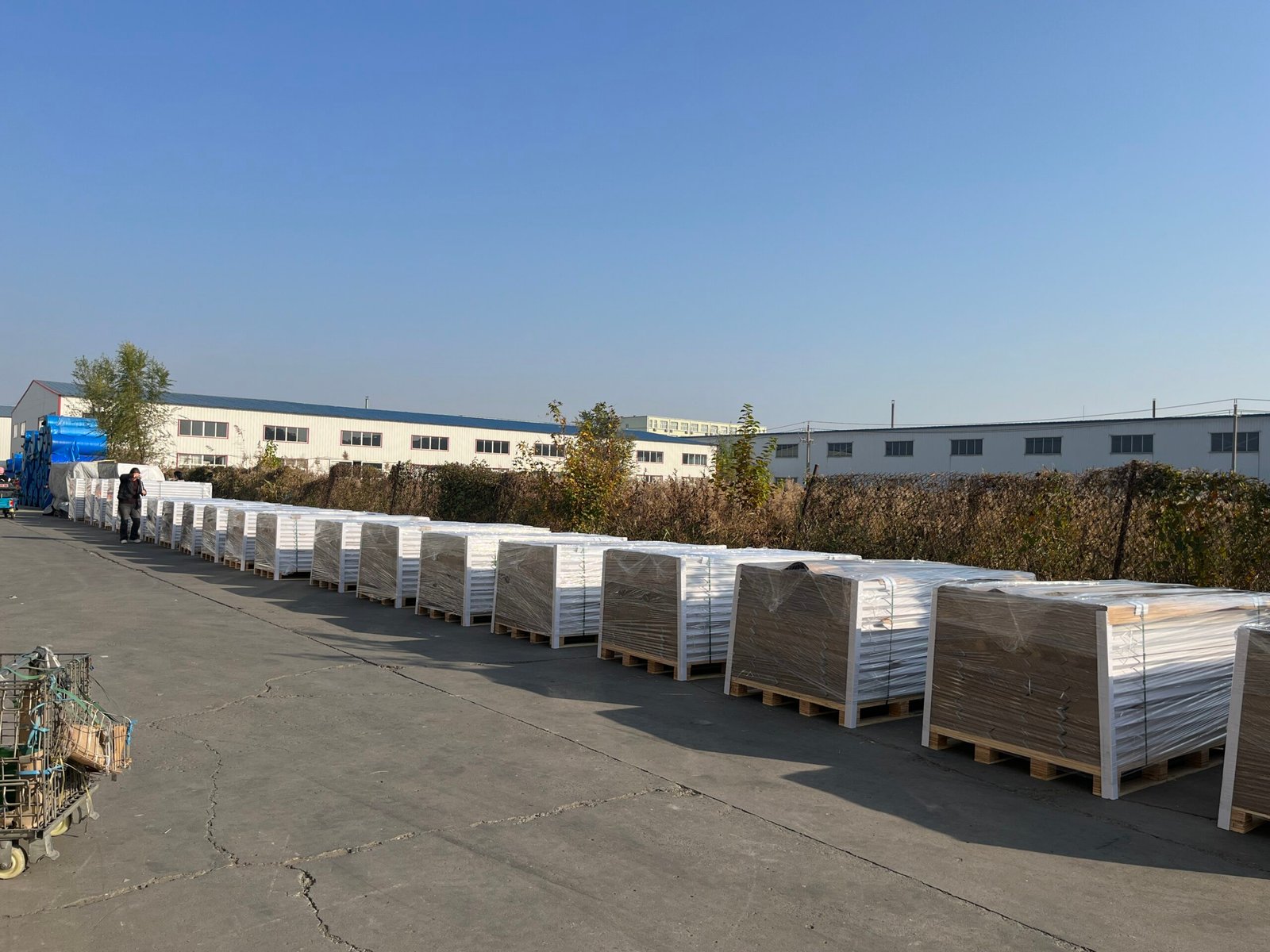
Record pallet dimensions, gross mass, load height, centre-of-gravity concerns and the stacking pattern. An aligned column of identical cartons is a different wrapping problem from mixed cartons with projecting edges. Check for sharp corners, compressible goods, gaps, slippery surfaces and carton overhang.
Describe the route as well: forklift transfers, pallet-jack handling, warehouse dwell time and vehicle movement all influence the trial. Film is part of a unit-load system. Pallet condition, carton strength and the arrangement of goods cannot be corrected simply by adding more wraps.
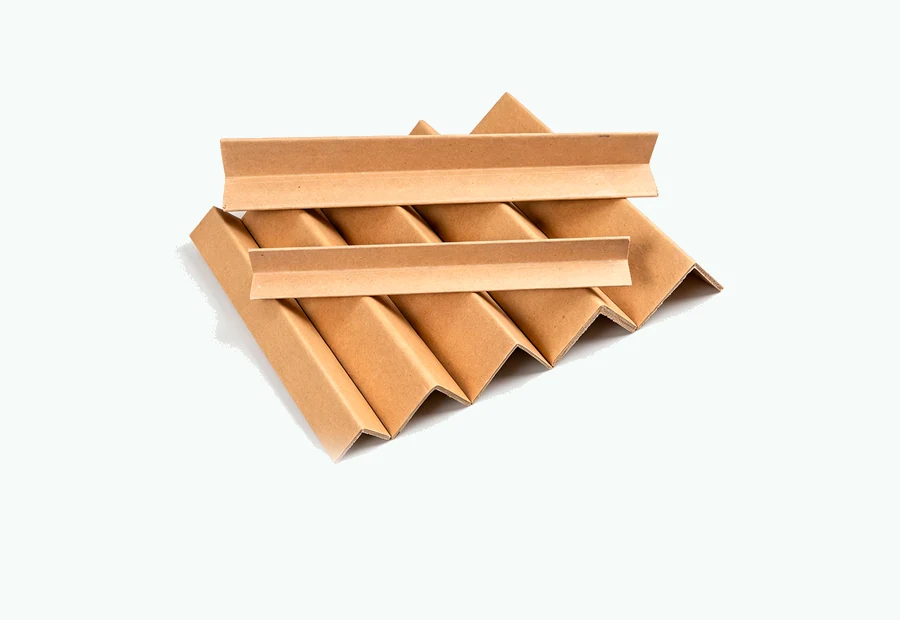
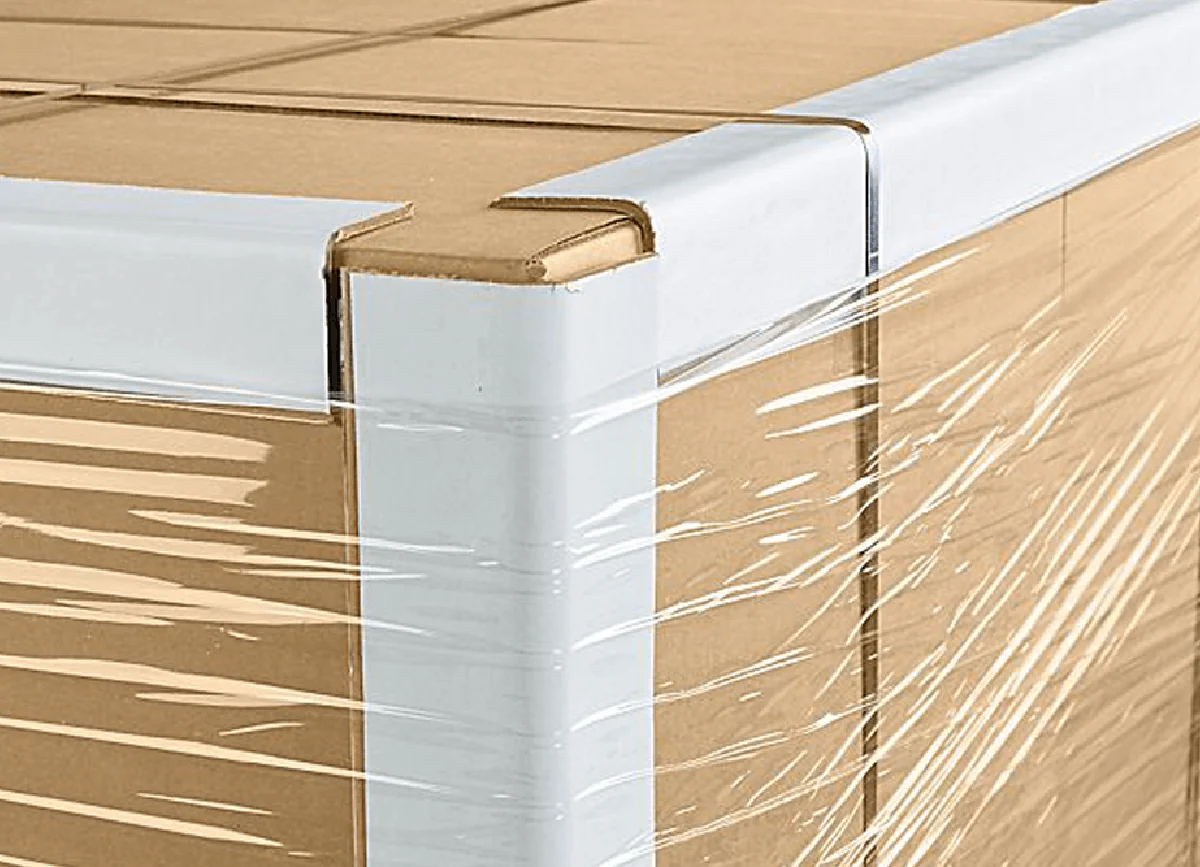
Where straps or edges create concentrated pressure, discuss suitable paper edge protection. If additional load securing is required, evaluate PET strapping as part of the packaging design rather than assuming it is interchangeable with stretch film.
Match hand film and machine film to the process
Hand application varies with operator technique, dispenser, walking pattern and fatigue. A hand-film trial should include normal operators and representative loads. Machine film must work with the wrapper’s carriage, pre-stretch system, speeds and available adjustments. A film that performs on one machine setup should not be assumed to perform identically on another.
Specify roll width, net film mass, core inside diameter, maximum roll outside diameter, winding direction and any equipment restrictions. Check how the film feeds, whether edges split and whether the tail remains secured after wrapping. Keep the machinery manufacturer’s operating instructions as the basis for equipment settings.
Use a controlled wrapping trial
- Document the baseline: record the current film, load configuration, wrapper settings, wrap pattern, film consumption and known damage issues.
- Change one major variable at a time: trial the candidate film with a defined setup before adjusting several machine parameters.
- Measure across the load: record containment at repeatable top, middle and bottom positions using the same procedure.
- Recheck after dwell: use a defined interval to examine remaining restraint, film damage, carton deformation and tail release.
- Run representative handling: assess the wrapped pallet through an agreed route or appropriate laboratory program.
- Set acceptance criteria: define acceptable movement, damage, breaks and usage before selecting the commercial specification.
Choose sample quantities that reflect process variation; a single neat-looking pallet is weak evidence for a high-volume change. Record both successful trials and failures so that a lower material cost does not conceal an increased risk of damage.
Which tests support a purchasing decision?
ASTM D5331 addresses mechanical handling evaluation of unitized loads secured with stretch-wrap film. It is relevant when evaluating the wrapped package as a handling system. Separately, ISTA offers distribution-test procedures whose suitability depends on the shipment profile. Ask the laboratory to choose the method, current edition and test levels for the actual route.
These references do not supply a universal containment-force target for every pallet. They also do not make a particular film “certified” merely because a supplier lists a standard on a data sheet. Request a report that identifies the actual film, pallet configuration, wrapping settings and acceptance outcome.
Compare cost per accepted pallet
Price per roll can hide differences in net film content, core weight and yield. Price per kilogram improves the material comparison but still does not show how much film is consumed by each accepted load.
Film cost per pallet = net film used per pallet (kg) × film price per kg. For an illustrative trial, 0.28 kg at US$2.10/kg costs US$0.588 per pallet in film. A second setup using 0.24 kg at US$2.30/kg costs US$0.552. These hypothetical numbers illustrate the calculation only; they are not HengNice prices or a savings promise.
The second option is commercially preferable only if it meets the same acceptance requirements. Add wrapping time, film breaks, rework and damage outcomes to the comparison. Measure consumption across repeated loads and exclude the core from the net film calculation.
What to include in a stretch-film RFQ
- Pallet footprint, load height, gross mass, stacking pattern and load photographs.
- Hand or machine application; for machines, wrapper and carriage details.
- Current thickness, roll width, net film mass, core dimensions and usage per pallet.
- Pre-stretch convention, application settings and top/bottom wrap pattern.
- Puncture, cling, clarity or other application priorities and the current failure mode.
- Handling route, acceptance tests, order quantity, destination and delivery timing.
Frequently asked questions
Is thicker stretch film always stronger in use?
Thickness alone cannot answer that. Compare the material properties and the performance of the complete wrapped load at the settings you can reproduce.
Does maximum pre-stretch give the lowest packaging cost?
Not necessarily. A higher setting can be unsuitable for the film, wrapper or load. Compare material usage only after the wrapped pallets meet the same performance criteria.
Can stretch film replace transport load restraint?
Do not assume so. Unitizing goods on a pallet and securing cargo within a vehicle or container are separate design tasks. Review the complete transport securing arrangement with the responsible logistics team.
Share your load photos, wrapping equipment and current film usage with HengNice to discuss a film specification and sample evaluation.